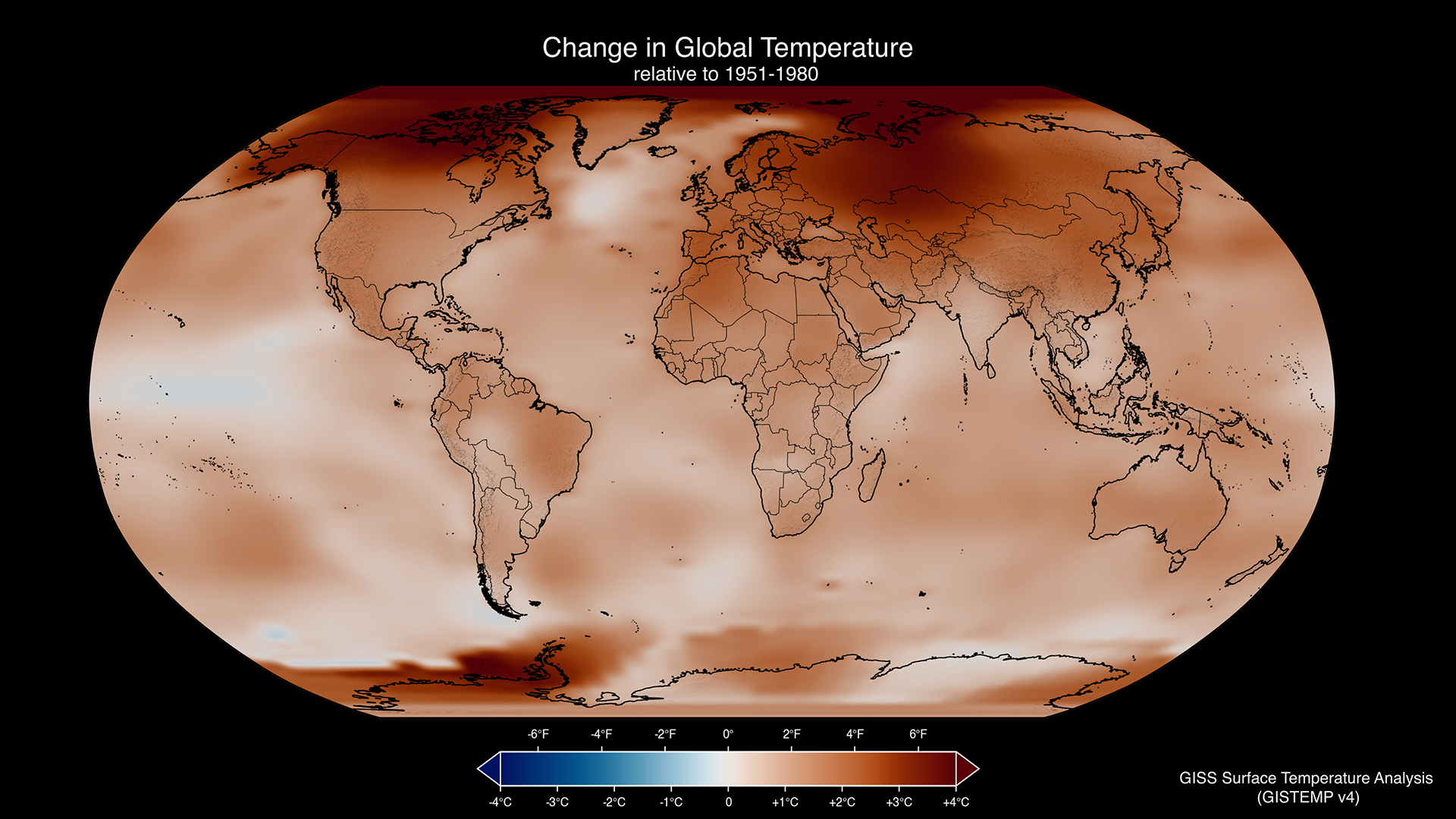
Rising temperatures
Instrument records, satellites, ocean buoys, and ice cores all point to a planet storing more heat.
Global warming, explained clearly
Global warming is the long-term rise in Earth's average temperature, driven mainly by heat-trapping pollution from burning coal, oil, and gas.
The evidence
Instrument records, satellites, ocean buoys, and ice cores all point to a planet storing more heat.
Warmer seawater expands, melts land ice, and raises sea levels along vulnerable coastlines.
Heat waves become more likely and intense, while heavier downpours and drought stress reshape daily life.
The trend
The curve below is a simplified illustration of the modern warming trend. It is designed to show the shape of the change: slow early movement, then faster warming in recent decades.
Why it happens
Sunlight reaches Earth, the surface warms, and some heat radiates back toward space. Carbon dioxide, methane, and other greenhouse gases absorb part of that outgoing heat and send some of it back downward.
Electricity, transport, heating, and industry release carbon dioxide when coal, oil, and gas are burned.
Deforestation removes carbon-storing trees and often releases stored carbon from soils and biomass.
Methane and nitrous oxide come from livestock, fertilizers, landfills, and some industrial processes.
What changes
The risks are uneven. Some communities face more dangerous heat, some face flood and fire risk, and many face higher costs for energy, food, insurance, and infrastructure.
What helps
Scale wind, solar, storage, efficient grids, and other low-carbon energy sources.
Insulate homes, use heat pumps where practical, and reduce wasted energy.
Improve public transit, walking, cycling, electric vehicles, and freight efficiency.
Protect forests, restore wetlands, cool cities with trees, and design for floods and heat.